
Heal Your Gut, Boost Your Immunity & Improve your Health Naturally
Acknowledgement
This book is dedicated to our passed Beloved brother Zeeshan Raza, (May God Bless him).
Authors & Contributors
Zeeshan Raza (Doctor of Veterinary Sciences)
Ahsan Raza (MSc Biotechnology, MSc Zoology, BSc Physical Sciences)
Aqsa Raza (MPhil Zoology)
Hassan Raza (MPhil English)
Table of Contents
📌Introduction: Unlock the Secret to a Healthier You
- Understanding Gut Health
- The Purpose of This Book
📌 Chapter 1: Meet Your Gut Microbiome – The Tiny Army Within You
- The Gut Microbiome Explained
- The Role of Bacteria in Digestion
- How Gut Bacteria Influence Your Overall Health
- Immune System Boost
- Metabolism & Weight Management
- Gut-Brain Connection & Mental Health
- Gut Health and Immunity: The Perfect Pair
📌 Chapter 2: Is Your Gut Trying to Tell You Something?
- Common Digestive Symptoms
- Mental Health Symptoms
- Skin Conditions Linked to Gut Health
- Weight Gain, Sugar Cravings, and Fatigue
📌 Chapter 3: Gut Health Meets the Brain – A Connection You Can’t Ignore
- How Gut Bacteria Influence Mood and Cognition
- The Power of Neurotransmitters in Your Gut
- Stress and Anxiety: Not Just a Mental Game
- Simple Strategies for a Happy Gut and Brain
📌 Chapter 4: Fuel Your Gut with the Right Foods
- Top Probiotic Foods
- Prebiotic Foods: The Gut’s Best Friend
- Harmful Foods to Avoid
- Gut-Friendly Sample Meal Plan
📌 Chapter 5: Lifestyle Habits That Support Gut Health
- The Importance of Sleep
- Managing Stress for a Healthier Gut
- Exercise for a Happy Gut
- The Best Hydration Practices
- Checking for Food Intolerances
📌 Chapter 6: Naturally Healing Your Gut
- Healing Foods & Supplements
- Gut Herbal Helpers for Gut Health
- The Magic of Fiber
- How Fasting Benefits Your Gut
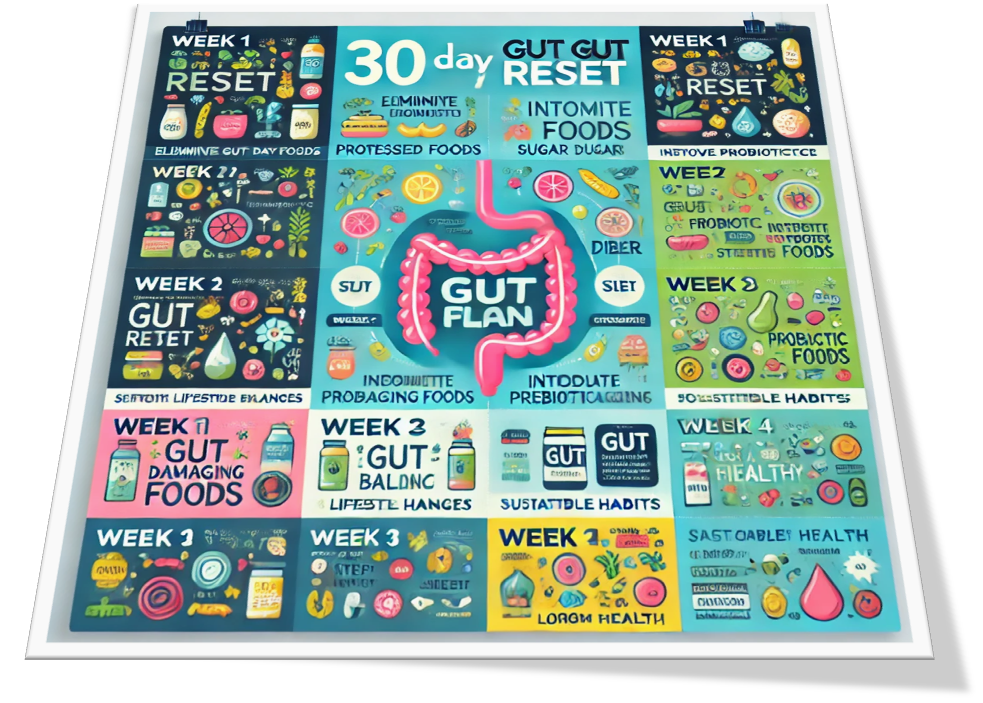
📌 Chapter 7: Your 30-Day Gut Reset Plan
- Week 1: Eliminating Gut-Damaging Foods
- Week 2: Introducing Probiotic & Prebiotic-Rich Foods
- Week 3: Restoring Balance with Lifestyle Changes
- Week 4: Developing a Gut-Friendly Routine
- How to Track Your Progress
📌 Conclusion: Maintaining Gut Health for Life
- Key Takeaways for Long-Term Gut Health
- The Next Steps in Your Gut Health Journey
Introduction: Unlock the Secret to a Healthier You
Understanding Gut Health
Do you know that your gut is often referred to as your “second brain”? It’s true! Your gastrointestinal (GI) tract is home to trillions of microorganisms—bacteria, fungi, viruses, and more—that are silently working around the clock to keep you healthy (Marchesi & Ravel, 2015).
When your gut is happy, it helps you digest food, absorb essential nutrients, and even influences your mood and mental clarity. But when it’s out of balance? It can lead to digestive problems, a weakened immune system, and even chronic health conditions. That’s why taking care of your gut is a game-changer for your overall well-being
The Purpose of This Book
This guide is your go-to resource for understanding your gut, pinpointing when it’s out of sync, and finding natural solutions to get it back on track. Whether you’re dealing with bloating, fatigue, or skin breakouts that just won’t quit, this book will show you how to improve your gut health in ways that are easy, practical, and effective.
📌 Chapter 1: Meet Your Gut Microbiome – The Tiny Army Within You
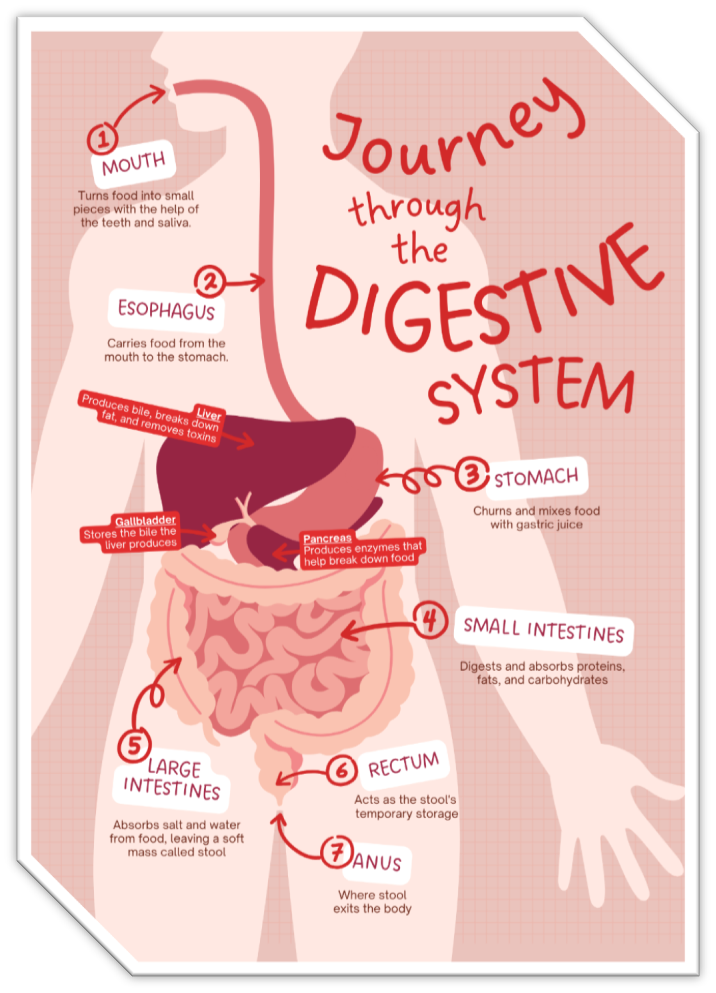
The Gut Microbiome Explained
Think of your gut as a bustling city, populated by trillions of microorganisms working in harmony to keep everything running smoothly. Each person has different about 200 species of gut microbiome of bacteria, fungi and viruses inside the digestive tract (National Institutes of Health, 2021).
This ecosystem, known as the gut microbiome, plays a major role in not just digestion but also your immune system, mental health, and even your weight. In this chapter, we’ll dive deep into how these tiny microbes impact your life not only gut health—more than you might realize!
The Role of Bacteria in Digestion
While it may sound a bit scary, the bacteria in your gut are actually your best friends. They help break down food, absorb nutrients, and even produce vital vitamins like B vitamins and vitamin K (British Dietetic Association, 2022). Without these helpful bacteria, you wouldn’t be able to digest your food properly or absorb the nutrients your body needs to thrive (USDA, 2023).
How Gut Bacteria Influence Your Overall Health
Immune System: A thriving gut microbiome is your first line of defense. It trains your immune system to recognize harmful invaders while keeping inflammation in check.
Metabolism: Believe it or not, your gut bacteria play a pivotal role in your metabolism, helping regulate your weight, blood sugar, and energy levels.
Mental Health: Your gut produces neurotransmitters like serotonin and dopamine, which control your mood, stress, and even your ability to concentrate (Mayer, 2016).
Gut Health and Immunity: The Perfect Pair
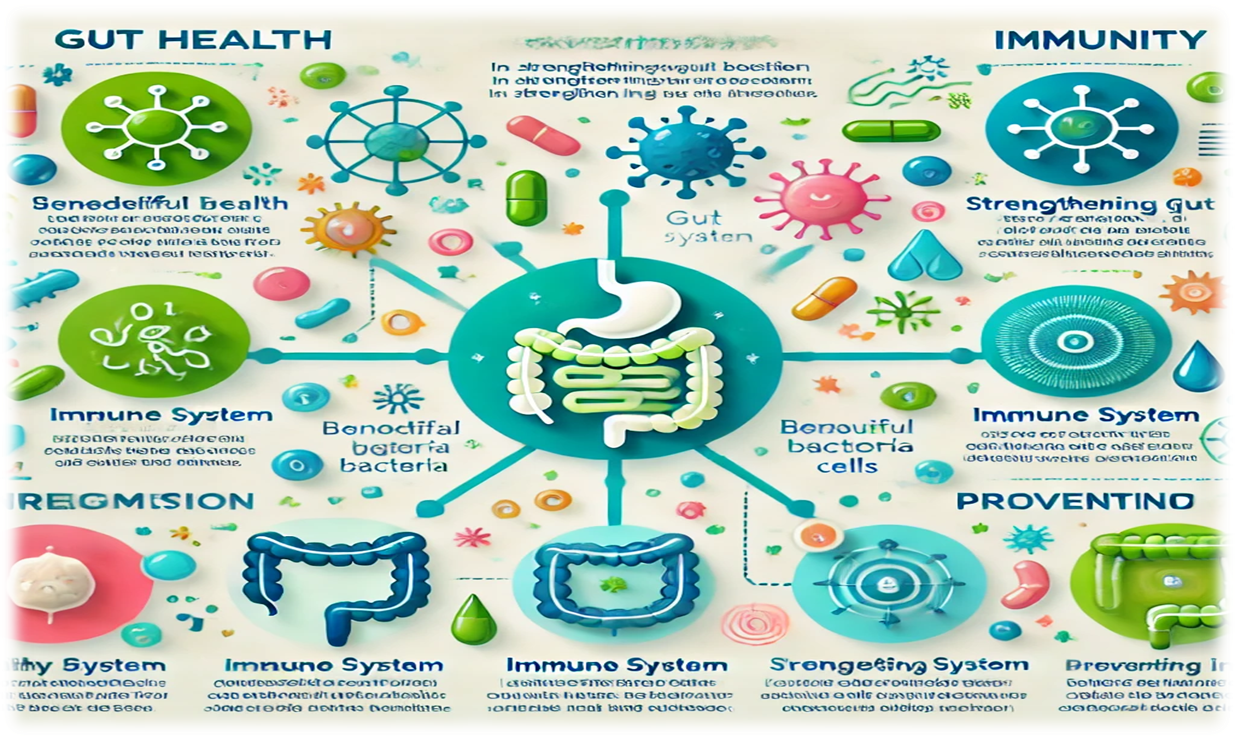
Did you know that about 70% of your immune system resides in your gut? (National Institutes of Health, 2021). Keeping your microbiome in balance means you’re boosting your immune defences, reducing the risk of infections, and even preventing autoimmune conditions.
📌 Chapter 2: Is Your Gut Trying to Tell You Something?
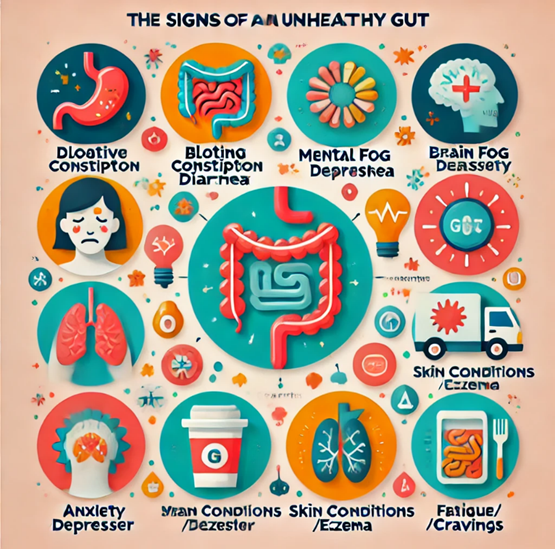
Your gut is constantly sending signals to your brain, but are you listening? Here’s how to spot the warning signs of an unhappy gut.
Common Digestive Symptoms
- Bloating, gas, or that “I ate too much” feeling
- Trouble with bowel movements—constipation or diarrhea
- Acid reflux or heartburn
Mental Health Symptoms
- Chronic fatigue or restless sleep
Skin Conditions Linked to Gut Health
Your gut’s distress can show up on your skin too! Acne, eczema, rosacea, and even psoriasis can all be linked to an unhappy gut microbiome.
Weight Gain, Sugar Cravings, and Fatigue
When your gut is out of balance, it can mess with your metabolism, leaving you craving sugar, feeling exhausted, and gaining weight—even when you’re eating right.
📌 Chapter 3: Gut Health Meets the Brain: A Connection You Can’t Ignore
How Gut Bacteria Influence Mood and Cognition
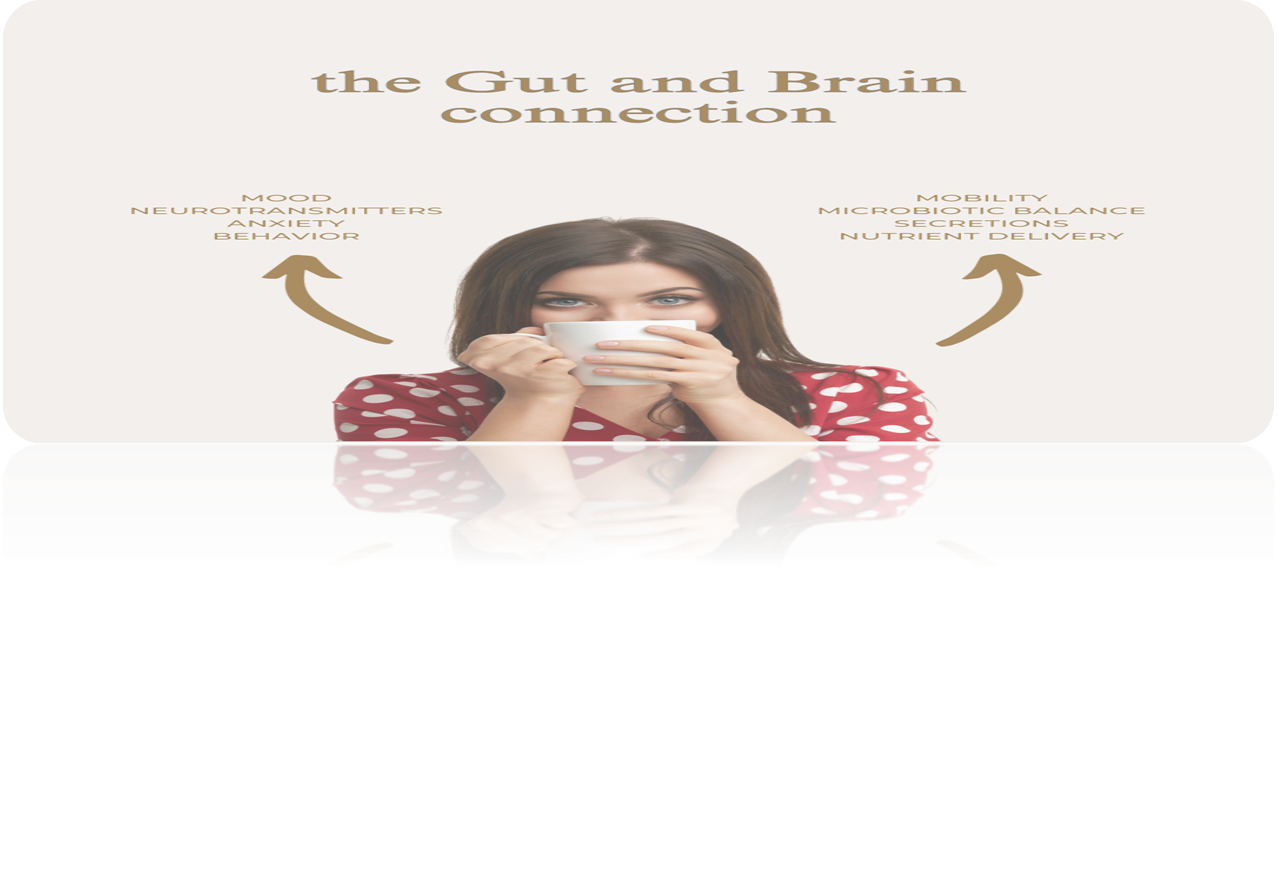
Did you know your gut can literally “talk” to your brain? Through the gut-brain axis, your gut sends messages that influence your mood, cognition, and overall mental clarity. A balanced microbiome leads to better emotional stability and stress management.
The Power of Neurotransmitters in Your Gut
Your gut produces important neurotransmitters like serotonin and dopamine, which are crucial for regulating your mood and cognitive functions. Imbalances in gut bacteria can contribute to feelings of anxiety, depression, and mental fog.
Stress and Anxiety: Not Just a Mental Game
Stress doesn’t just affect your mind—it also impacts your gut. Chronic stress can disrupt your microbiome, causing inflammation and digestive issues. Learning to manage stress is essential for keeping both your mind and gut in balance.
Simple Strategies for a Happy Gut and Brain
- Mindfulness and meditation to calm your mind and gut
- Prioritize sleep and exercise to keep both in top shape
- Fill your plate with prebiotics and probiotics for a healthy gut
📌 Chapter 4: Fuel Your Gut with the Right Gut Health Foods
What you eat directly impacts your gut health. Let’s explore which foods nourish your gut and which ones harm it.
Top Probiotic Foods
Probiotics are the beneficial bacteria your gut loves. Think of foods like yogurt, kimchi, kefir, and sauerkraut as the heroes that help maintain a balanced microbiome.
Prebiotic Foods: The Gut’s Best Friend
Prebiotics are the food for your beneficial bacteria. Garlic, onions, bananas, and asparagus are all high in prebiotics and help feed the good bacteria in your gut.
Harmful Foods to Avoid
Unfortunately, some foods can disrupt the balance of your microbiome. Processed foods, sugary snacks, refined carbs, and alcohol can all contribute to gut imbalance.
Foods that are good for gut health (The best Gut Health Foods)
- Fruits and veggies: Fresh fruits and vegetables have anti-inflammatory qualities because of their vitamins. This may contribute to giving gut bacteria a healthy environment. Additionally, they are high in fibre, which supports healthy digestion.
- Beans and lentils: Both beans and lentils are high in resistant starch and dietary fibre. Good gut bacteria use this kind of carbohydrate as fuel. Think about including more lentils and beans in your diet, such as kidney beans, chickpeas, and black beans.
- Oats: Packed with soluble fibre, whole grains like oats support the large intestine’s fermentation process and encourage the development of beneficial.
- Seeds and nuts: Nuts and seeds are a fantastic source of healthful fats and fibre. Nut-rich meals may increase the number of good bacteria in the stomach.
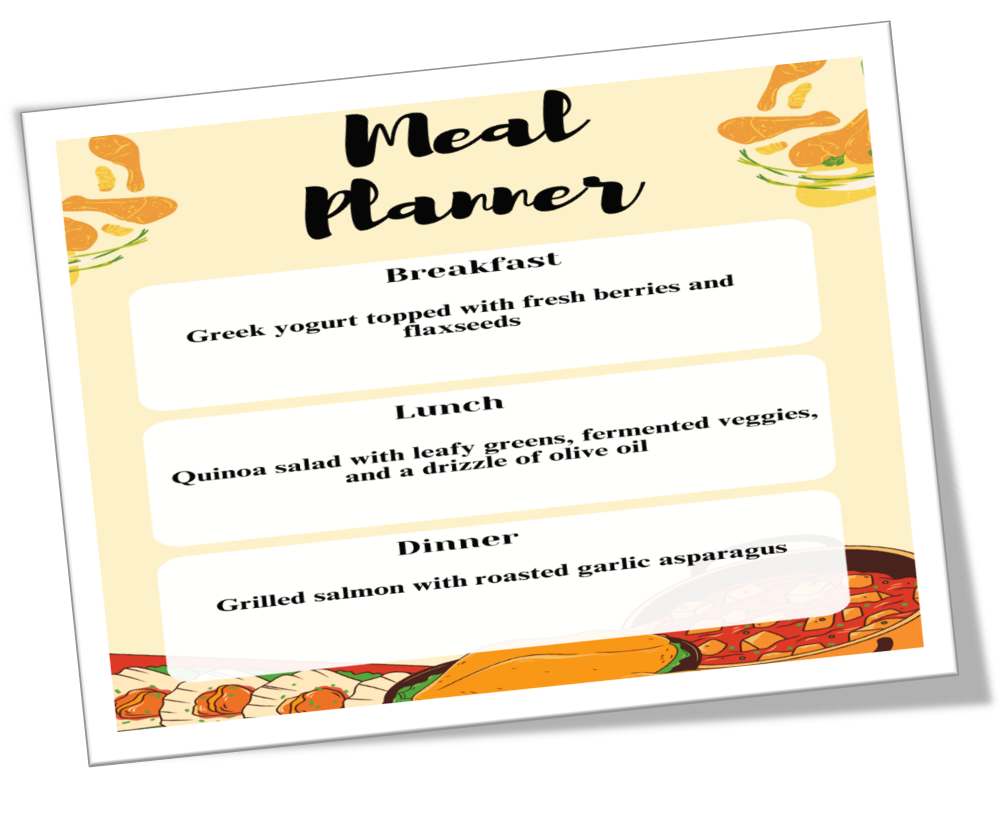
Gut-Friendly Sample Meal Plan
- Breakfast: Greek yogurt topped with fresh berries and flaxseeds
- Lunch: Quinoa salad with leafy greens, fermented veggies, and a drizzle of olive oil
- Dinner: Grilled salmon with roasted garlic asparagus.
📌 Chapter 5: Lifestyle Habits That Support Gut Health
Eating the right foods is just one part of the equation. A healthy lifestyle is equally important for a happy gut.
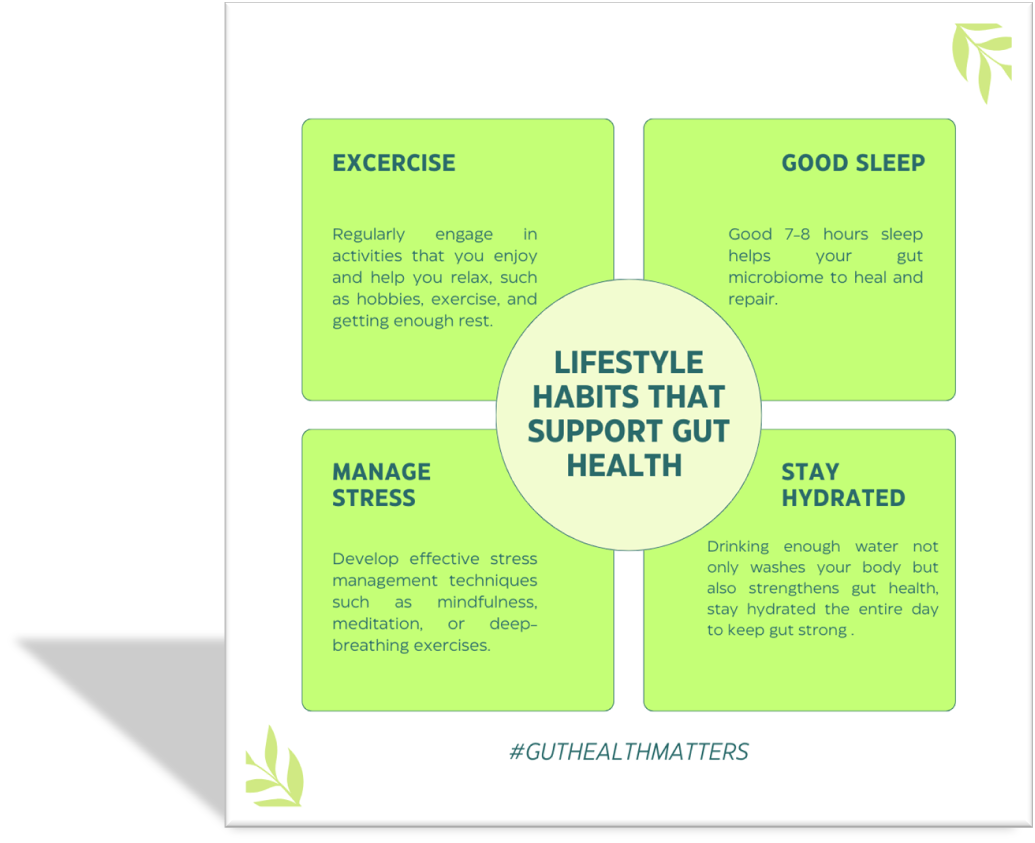
The Importance of Sleep
Sleep isn’t just for recharging your energy—it’s also when your gut does its healing and repair work. Without quality sleep, your gut microbiome suffers.
Managing Stress
Stress can wreak havoc on your gut, so learning to manage it is essential. Practices like yoga, meditation, and deep breathing exercises can help reduce gut-damaging stress.
Obtain a Food Intolerance Check
When the body has trouble digesting a particular food, it can lead to food intolerances. Food allergies are not the same as food intolerances. Among the signs of food intolerance are:
- Pain in the abdomen
- reflux of acid
- Bloating
- Having diarrhoea
- Weariness
- Nausea from Gas
- Consult your primary care physician if you think you may have a food intolerance. They may recommend removing the food from your diet to see if symptoms improve.
Exercise for a Happy Gut
Exercise isn’t just great for your body—it also helps your gut work more effectively, promoting healthy digestion and a balanced microbiome. I’ve discovered that the following easy weekly workout routine is beneficial for gut health:
MY WEEKLY PLANNER
| MON | A 30-minute walk | |
| TUE | Light Yoga | |
| WED | Ride a bike for 30 minutes | |
| THU | Mild stretches exercise | |
| FRI | Jog for 30 minutes | |
| SAT | Some leisure activities | |
| SUN | Go hiking |
Stay Hydrated
Although the source of the water is also important, drinking a lot of water about 2L a day may be associated with a greater diversity of bacteria in the stomach.
One study from 2022A type of bacteria that can cause gastrointestinal diseases was also found to be less prevalent in those who drank more water, according to Trusted Source.
Maintaining proper hydration might help you avoid constipation and improve your general health. It might also be an easy method to support intestinal and gut health.
📌 Chapter 6: How to Improve Gut Health Naturally
Your diet isn’t the only way to improve gut health—certain foods, herbs, and practices can help accelerate the healing process.
Gut-Healing Foods & Gut Health Supplements
- Best Probiotics for Gut Health: Yogurt, kefir, and kimchi are loaded with beneficial bacteria that help restore balance and regarded as the best probiotics for gut health.
- Prebiotic Fiber: Foods like oats, onions, and garlic feed your gut bacteria, helping them thrive.
Herbal Helpers for Gut Health
Peppermint, ginger, turmeric, and bone broth can all soothe your gut and promote healing.
The Magic of Fiber
Fiber acts as food for beneficial gut bacteria and promotes smoother digestion.
How Fasting Benefits Your Gut
Intermittent fasting gives your gut a chance to reset, encouraging microbial diversity and improving gut health.
📌 Chapter 7: Your 30-Day Gut Reset Plan
Ready to take action? Here’s a practical guide to resetting your gut health in just 30 days!
- Week 1: Eliminate Gut-Damaging Foods
Say goodbye to processed foods, sugar, and dairy.
The first week is important about making a gradual transition; I begin by increasing my intake of foods high in fibre and drinking plenty of water. My body needs time to adapt to the changes without feeling overburdened.
- Week 2: Introduce Probiotic and Prebiotic-Rich Foods
Start incorporating fermented foods and fiber into your meals.
To support my microbiota, I concentrate on varying my diet in the second week by including a variety of probiotic and prebiotic items. I also start a basic fitness routine to help with digestion.
- Week 3: Restore Balance with Lifestyle Changes
Focus on sleep, hydration, and stress management.
By the third week, I’m adding some supplements that have been demonstrated to promote gut health, such as Metabolaid and Tributyrin, per my research and the recommendation of my healthcare practitioner. At this point, I also begin to observe changes in my general health and regularity of digestion.
- Week 4: Develop a Gut-Friendly Routine
Make these habits a permanent part of your lifestyle.
Reinforcing these behaviours and becoming ready to keep them up after the 30-day period are the goals of the last week.
Keep track of Your Development: What to Anticipate
It’s important to monitor your progress over this 30-day gut-healing journey in order to determine how your body is reacting to the changes. Having some ups and downs at this time is common.
As your body gets used to the infusion of gut-friendly meals and water, you may experience changes in your bowel motions or increased bloating during the first week. These symptoms should start to go away by the second week, and you should start to feel more energised and less tense after meals.
Here’s a simple way to monitor your progress:
- Week 1: Note any immediate reactions and how you feel overall.
- Week 2: Observe changes in digestion and energy levels.
- Week 3: Keep an eye out for gains in stress reduction and sleep quality.
- Week 4: Consider the general shifts and the evolution of your symptoms.
Keep in mind that gut healing is an individual journey, and your experience may not be the same as others’. Remain patient, pay attention to your body’s cues, and don’t be afraid to seek medical advice if you have any worries.
How to Maintain Gut Health Long-Term
Keeping Your Gut Healthy After 30 Days
i’ve discovered that repairing my gut is only the first step when I think back on the past month. Maintaining gut health is a lifelong process that calls for constant care and attention. It’s about adopting a lifestyle that supports my digestive system, not just about what I consume.
📌 Chapter 8: Myths and faqs About Gut Health
Gut Health Myths Busted
“All bacteria are bad” – Nope! Many bacteria are essential for health.
“Probiotics work instantly” – Sorry, it takes time and consistency.
Faqs
- Do probiotics really work? Yes! But they require regular use to show long-term benefits.
- Can gut health affect my skin? Absolutely! A disturbed gut can lead to skin flare-ups and breakouts.
- What Function Does the Colon Serve in Digestion?
The colon, sometimes referred to as the large intestine, is essential for the body’s absorption of vitamins, water, and electrolytes as well as for the removal of waste. - How Can I Tell If Something Is Wrong With My Gut?
Signs of an unhealthy gut may include digestive issues, such as bloating, gas, diarrhea, or constipation, as well as general discomfort. - Are Green Tea Extracts Beneficial to Gut Health?
Green tea gummy extracts taken daily may reduce intestinal permeability and inflammation in the gut in as little as 28 days, according to research. - How Vital Is Long-Term Gut Health Maintenance?
Keeping your gut healthy is essential for your general health and should be a regular part of your daily routine to guarantee the best possible colon health.
Additionally, they advise doing strength exercise two or more days a week, such as through yoga, dancing, gardening, or weightlifting. Try to avoid prolonged spells of inactivity by interspersing them with activities.
Summary
Your gut is more than just a digestive system—it’s your second brain and the foundation of overall well-being. This book is your step-by-step guide to understanding, healing, and optimizing your gut health for better digestion, immunity, mood, and energy.
🔹 Meet Your Gut Microbiome – Discover how trillions of bacteria inside you influence digestion, metabolism, and mental health. Understanding what gut health is can help you take control of your well-being.
🔹 Is Your Gut Trying to Tell You Something? – Learn to recognize the warning signs of an imbalanced gut, from bloating and brain fog to skin issues and cravings. A gut health test can help pinpoint imbalances.
🔹 The Gut-Brain Connection – Your gut and mind are deeply linked! Find out how gut bacteria impact mood, cognition, and stress levels, and how probiotics for gut health play a crucial role in mental clarity.
🔹 Fuel Your Gut Right – Dive into the best probiotics for gut health and the best foods for gut health, including fiber-rich options and fermented foods. Avoid the worst foods for gut health that can disrupt your microbiome.
🔹 Lifestyle for a Healthy Gut – Simple yet powerful habits like sleep, hydration, stress management, and exercise can naturally improve gut health and digestion.
🔹 Naturally Heal Your Gut – Learn how to improve gut health naturally using herbal remedies, fiber-rich foods, and fasting strategies. Incorporate gut health supplements when needed for additional support.
🔹 Your 30-Day Gut Reset Plan – Follow a week-by-week plan to cleanse, rebuild, and maintain a thriving gut with practical meal ideas featuring foods good for gut health and beneficial gut health drinks.
By the end of this journey, you’ll have the tools to maintain long-term gut health and transform your overall wellness. Your healthiest, happiest self starts in your gut! 🌱✨
References
Scientific Journals & Research Studies
- Davenport, E. R., Mizrahi-Man, O., Michelini, K., Barreiro, L. B., Ober, C., & Gilad, Y. (2014). Seasonal variation in human gut microbiome composition. PLOS ONE, 9(3), e90731. DOI: 10.1371/journal.pone.0090731
- Marchesi, J. R., & Ravel, J. (2015). The vocabulary of microbiome research: A proposal. Microbiome, 3(1), 31. DOI: 10.1186/s40168-015-0094-5
- Zheng, J., Wittouck, S., Salvetti, E., Franz, C. M., Harris, H. M., Mattarelli, P., & Lebeer, S. (2020). A taxonomic note on the genus Lactobacillus. International Journal of Systematic and Evolutionary Microbiology, 70(4), 2782-2858.
Books & Expert Sources
- Mayer, E. (2016). The Mind-Gut Connection: How the Hidden Conversation Within Our Bodies Impacts Our Mood, Our Choices, and Our Overall Health. Harper Wave.
- Mosley, M., & Spencer, C. (2017). The Clever Guts Diet: How to Revolutionise Your Body from the Inside Out. Short Books Ltd.
- Rapin, J. R., & Wiernsperger, N. (2010). Possible links between intestinal permeability and food processing: A potential therapeutic niche for glutamine. Clinics and Research in Hepatology and Gastroenterology, 34(4-5), 321-332.
Trusted Health Websites & Reports
- National Institutes of Health (NIH). (2021). The human microbiome and its role in health and disease. Retrieved from https://www.nih.gov
- Harvard Health Publishing. (2022). The benefits of prebiotics and probiotics for gut health. Retrieved from https://www.health.harvard.edu
- World Health Organization (WHO). (2023). Gut health and the microbiome: Understanding the link to immunity and mental well-being. Retrieved from https://www.who.int
Food & Nutrition References
- The British Dietetic Association (BDA). (2022). Prebiotics and Probiotics: What You Need to Know. Retrieved from https://www.bda.uk.com
- U.S. Department of Agriculture (USDA). (2023). Dietary fiber and its benefits for gut health. Retrieved from https://www.nal.usda.gov


One thing I want to comment on is that weightloss program fast is possible by the perfect diet and exercise. A person’s size not merely affects the look, but also the complete quality of life. Self-esteem, major depression, health risks, along with physical abilities are affected in excess weight. It is possible to just make everything right and still gain. Should this happen, a problem may be the perpetrator. While a lot food and never enough exercise are usually responsible, common medical ailments and widely used prescriptions may greatly amplify size. Thx for your post right here.
Thank you so much for wonderful response, Please do subscribe the blog to take part in serving our community with right information. Thank you
Youre so cool! I dont suppose Ive read something like this before. So good to search out someone with some unique ideas on this subject. realy thanks for beginning this up. this web site is something that is needed on the web, somebody with a bit originality. helpful job for bringing something new to the web!
Thank you so much for wonderful response, Please do subscribe the blog to take part in serving our community with right information. Thank you
Hey there would you mind sharing which blog platform you’re using? I’m planning to start my own blog in the near future but I’m having a hard time making a decision between BlogEngine/Wordpress/B2evolution and Drupal. The reason I ask is because your design seems different then most blogs and I’m looking for something completely unique. P.S My apologies for getting off-topic but I had to ask!
Hey I am using IONOS hosting ( WordPress platform ). If you need more information you are welcome anytime. Wish you the best of luck for you new blog journey. Hoping to collab in future. ta